
Glen Allen, VA · Garage Door Service
Garage Doors on Glen Allen's Older Housing Stock
Glen Allen homes built mostly in the 1960s and 70s carry original hardware that wasn't built for today's springs or openers. Here's what to check before it fails.
- Repairs & new doors
- Springs & openers
- Serving 7 nearby communities
When to Get Help
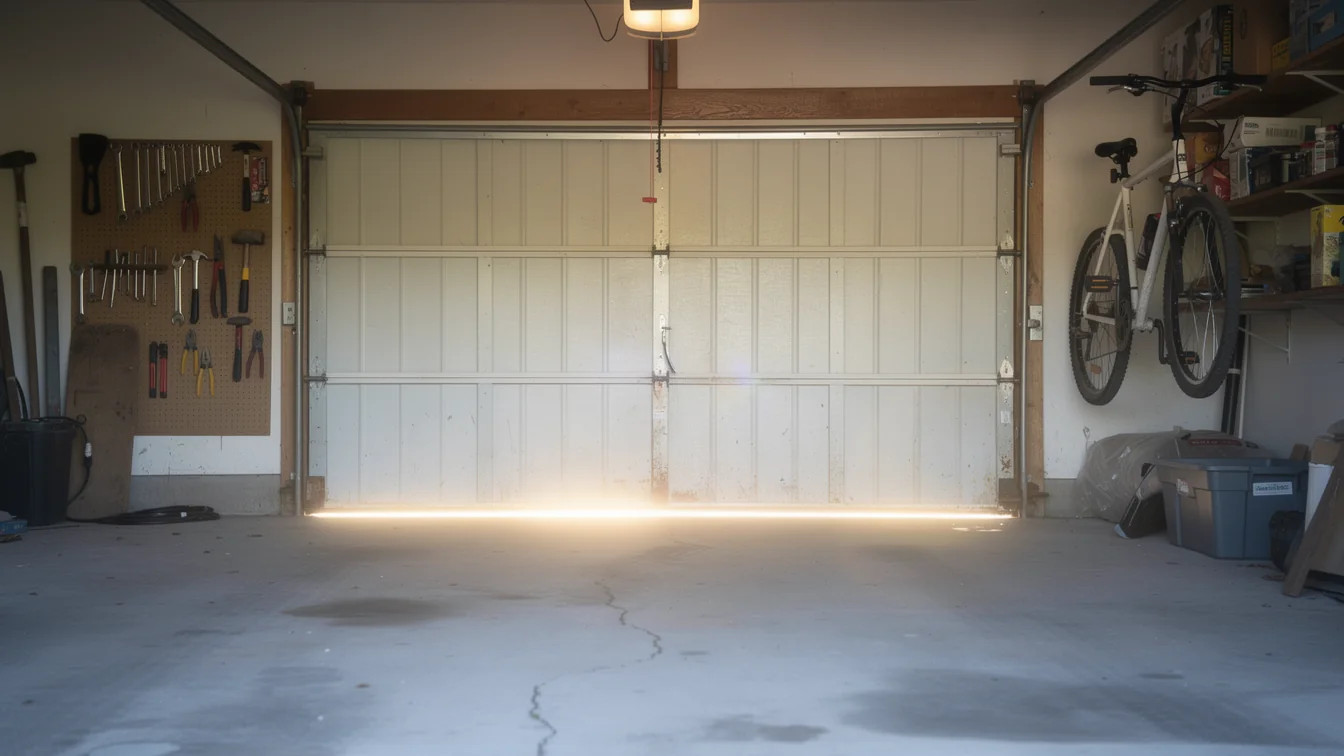
Most of Glen Allen's housing went up between 1938 and 2001, with the median build year sitting around 1974. That means a lot of doors out there are original, or close to it, especially across the older pockets near Lakeside, Dumbarton, and Chamberlayne. If your door is from that era, call before a spring snaps rather than after. A torsion spring wound for a 1970s door weighs different than what gets sold today, and when it breaks on an old bracket, the bracket sometimes goes with it. If you hear a bang from the garage and the door won't budge, or budges only a few inches before stopping, that's a spring gone - don't force the opener, it'll just burn out the motor trying to lift dead weight. Get help the same day if the door is stuck open; an unsecured garage is a break-in risk overnight. If it's stuck shut and nobody needs the car, it can usually wait a day without turning into a bigger repair.
What to Check
Start with the hardware, not the door skin. On houses from the 1960s and 70s stock that make up most of this area, the track brackets are often the original steel, and after decades of temperature swings they can work loose at the lag screws. Check if the brackets are still flush against the jamb - gaps wider than a nickel mean the wood behind them has started to give. Look at the bottom panel for rust lines where it meets the slab; older doors here rarely had a thermal break, so condensation collects at that seam every winter. Spin the rollers by hand with the door closed - if they're the solid nylon kind with no bearing, that's original equipment, and they're due. Last, check the spring itself for gaps between the coils when the door is down; even coil spacing means it's still under even tension, and wide gaps on one side mean it's wearing unevenly and close to its last cycle.
What Local Conditions Do
Glen Allen sits in a cold-moderate climate band, which means steel hardware goes through a real freeze-thaw cycle most winters without the brutal extremes of a true cold climate. That's actually harder on old doors than either extreme alone - the metal contracts enough to loosen fasteners and crack dried-out weatherstrip, but not enough to force a full seasonal replacement cycle the way northern climates do. On a door built before insulation rules existed as a line item, that seasonal flex works on bare steel panels with no foam backing to absorb it. Over forty-plus years, that's thousands of expansion-contraction cycles on the same screws and welds. It shows up as a door that tracks fine in July and binds or rattles starting around the first hard frost - not broken, just tired metal finding its limits again.
The Situation
Here's the honest part: if your door is original to a house built in the 1960s or 70s, a lot of the parts on it simply aren't made anymore. Standard-width tracks and spring sizes from that era sometimes need a custom cut rather than an off-the-shelf part, and that can mean a short wait rather than a same-day fix. We'll tell you straight when a repair is throwing money at a door that's at the end of its service life versus when it's a quick fix - a worn roller or a loose bracket is worth fixing, but a cracked original panel with rusted-through seams usually isn't. Across Glen Allen's older sections, that's the call we make most often: patch what's fixable, replace what isn't, and not pretend a forty-year-old panel is going to outlast another decade.
Frequently asked questions
Why does my garage door only act up in winter?
Glen Allen's cold-moderate climate puts steel hardware through a real freeze-thaw cycle each year. On older doors without insulation or a thermal break, that seasonal contraction loosens fasteners and stiffens dried-out weatherstrip, so a door that ran fine all summer can start binding or rattling once frost sets in.
Is it worth replacing an original 1970s door instead of repairing it?
Depends what's wrong. A worn roller, loose bracket, or stretched cable is a reasonable fix on an older door. A cracked panel with rust at the bottom seam, common on doors from this era with no thermal break, usually isn't worth chasing - replacement ends up cheaper over time.
Why can't you just order a replacement spring off the shelf?
Doors built in the 1960s and 70s sometimes used track widths and spring winds that aren't standard sizes today. Sometimes the part needs a custom cut, which can mean a short wait instead of a same-day swap. We'll tell you up front if that's the case rather than guess.
Related garage door services in Glen Allen
More garage door guides
Book garage door service in Glen Allen
Call now or request a quote - tell us what the door is doing and where you are.